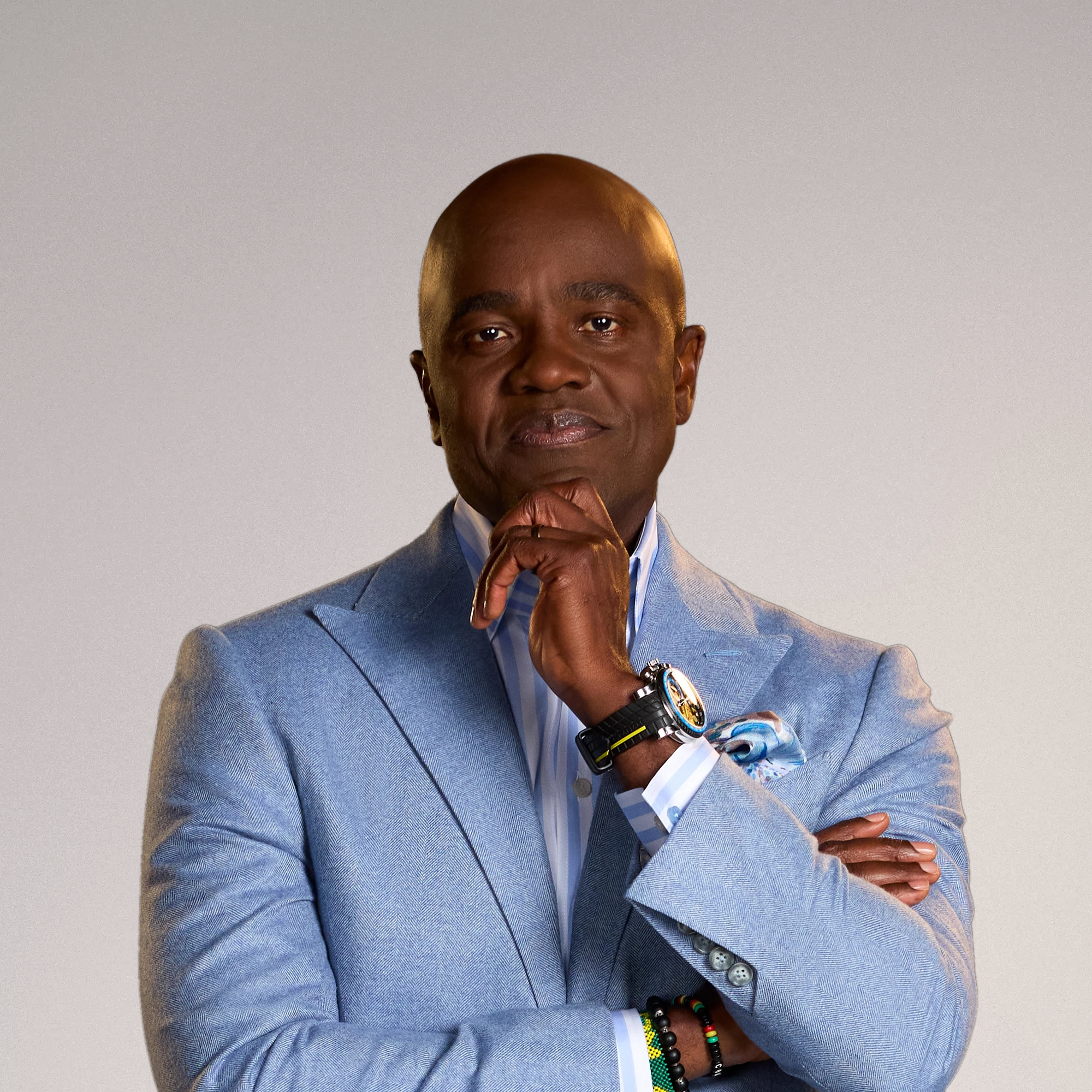
Wes Hall is a living embodiment of “the Canadian dream.” The Founder and Chairman of WeShall Investments Inc., Wes comes from humble beginnings in rural Jamaica. He grew up in a plantation worker's shack as one of several children supported by his grandmother, who instilled in him the value of hard work, ambition and industriousness.
In 1985, Wes immigrated to Canada, where he set about to become the businessman you see today. Dressed daily in a suit, Wes started as a mail clerk at a leading law firm in Toronto. His curiosity, intelligence and ability to spot opportunities allowed him to turn a $100K bank loan into his first business, Kingsdale Advisors, which became Canada's preeminent shareholder advisory firm.
As the Founder of Kingsdale Advisors, Wes has delivered an unparalleled track record of success for North America's biggest names, including Air Canada, Barrick, BHP Billiton, Citigroup, CN, CP, Ovintiv, Goldcorp, Talisman and Suncor. He has been sought out to lead some of the highest-profile deals and activist campaigns in North America.
Wes' expertise was invaluable on the complicated dispute between Toronto-based Goldcorp and Nevada-based Glamis Gold from 2004 to 2006, Xstrata PLC's USD 18-billion takeover of Falconbridge in 2006, and the $19-billion merger between Suncor and Petro-Canada in 2009.
Wes is also the owner of QM Environmental, a leading national environmental and industrial services provider with over 450 employees; Titan Supply, a top manufacturer and distributor of rigging and wear products serving industries in the oil and gas, construction and transportation sectors; and Harbor Club Hotel, Curio Collection by Hilton, one of St. Lucia's premier resorts.
Wes is the Founder and Chairman of The Canadian Council of Business Leaders Against Anti-Black Systemic Racism and the BlackNorth Initiative, which is committed to removing anti-Black systemic barriers negatively affecting the lives of Black Canadians. He has instructed Black Entrepreneurship & Leadership at the Rotman School of Management at the University of Toronto, a first-of-its-kind course in North America.
A staunch philanthropist, Wes is deeply committed to community upliftment. Wes is the vice-chair of the Board of Governors at Huron University College, a member of the Capital Markets Modernization Taskforce, and sits on the board of directors for SickKids Foundation, TIFF and Pathways to Education Canada.
In 2021, the Ontario Chamber of Commerce awarded him the Lifetime Achievement Award, and the Canadian Chamber of Commerce named him Canadian Business Leader of 2022. Wes has received Honorary Doctorates from the University of the West Indies, the University of Ottawa, Toronto Metropolitan University, Queen's University, the University of Toronto and York University. He received the Chancellor's Award from the University of the West Indies, the Medal of Distinction from Huron University in 2022 and the Nation Builder Award from the Empire Club in 2024. Wes was named one of Bay Street's top 40 most influential figures of the past four decades by The Globe and Mail in 2024.
He has also changed the lives of thousands of children in the Caribbean and Canada, donating his money and time. Wes' other accomplishments include penning a bestselling memoir, “No Bootstraps When You're Barefoot,” which was a finalist for the 2023 National Business Book Awards. He launched a podcast in partnership with the Toronto Star, “Between Us with Wes Hall,” and is also on the hit CBC series “Dragons' Den.” Wes is an in-demand speaker across Canada and a frequent guest on BNN Bloomberg.